When the herring supported Hållsviken
For generations, families around Hållsviken lived off the sea. Through Astrid Gustavsson's memories, we follow a coastal life marked by hard work, community, and a fishing tradition that shaped the village.
Article
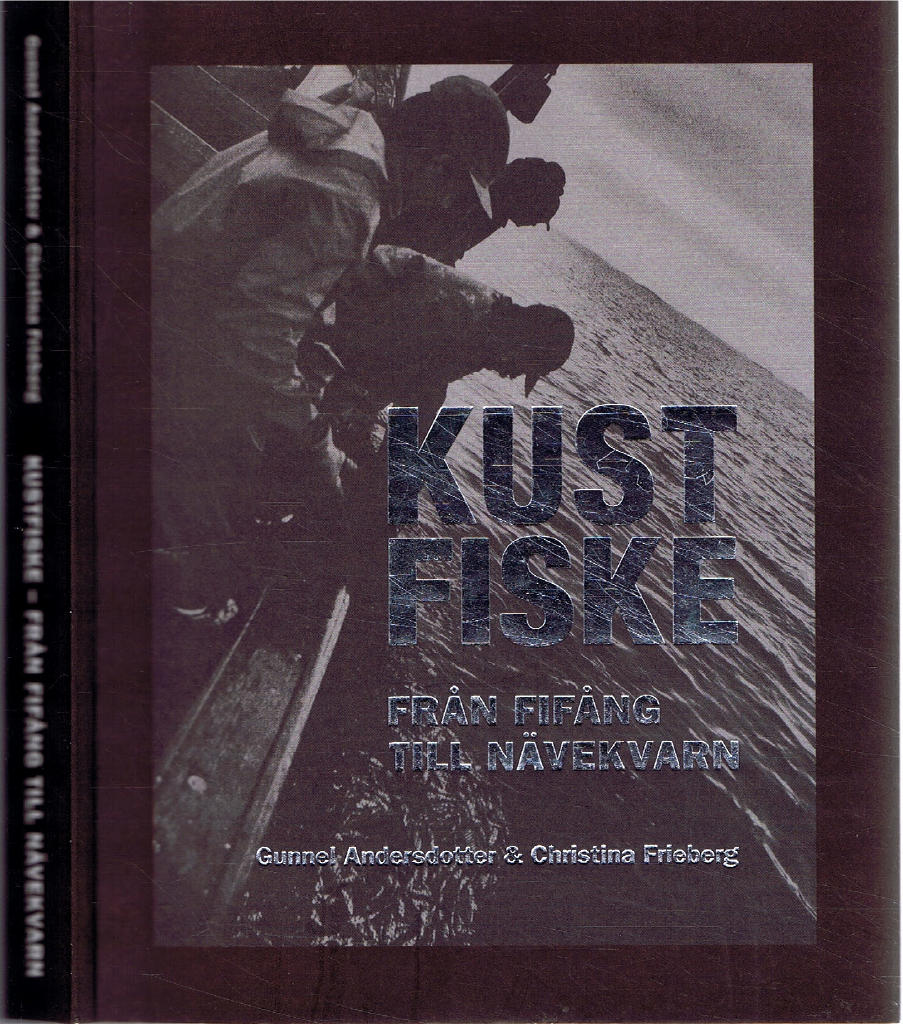
From nightly herring fishing to industrial jobs – Astrid's story of life at Hållsviken
Hållsviken is more than a bay on the Sörmland coast. For Astrid Gustavsson, it is her entire life story – a tale of generations of fishermen, self-sufficiency, and a coastal community where work, nature, and community went hand in hand.
Astrid's family has farmed Källvreten for over 200 years. When her grandfather bought the cottage from Tureholm estate around 1920, the family became owners of the place where her ancestors had lived for nine generations. Today, it is her son who remains, and her granddaughter represents the twelfth generation on the farm.
The herring provided cash
Life revolved around self-sufficiency. Cows, pigs, chickens, and fields provided food for the family, but it was the spring herring fishing that brought in the money needed to make ends meet. The father fished year-round, but when the herring went to spawn, nets were filled and tended night after night.
The fishing waters were not owned by the family but were leased. Payment was made in fish – if the catch was poor, there was no compensation. As a child, Astrid cycled around with fish to the landowners and learned early how fishing was built on trust and old agreements.
A life between nets and family
When Astrid met the fisherman Birger Gustavsson, she took the step into a new life at Torvsnäs. They married in 1960 and began to build their future around fishing.
During the intense spring herring fishing, the alarm clock rang as early as one or two in the morning. The sleeping children were carried down to the boat and allowed to sleep under the foredeck while the parents pulled the nets together with the other fishermen in Hållsviken. When the boats returned at dawn, sorting the catch awaited before the truck from Sörmlandsfisk picked up the day's delivery to Trosa.
The fishing spots were well-kept secrets. The fishermen liked to compare the amount of fish but never exactly where it had been caught. The knowledge was passed down and was an important part of the craft.
Quality long before the word became modern
Every morning, the herring was carefully sorted by size before being sent on. The local receiver checked the quality meticulously and ensured that each box met the right standard.
Astrid noted that they did not talk about ”logistics” or ”quality work” back then – but that was precisely what they were engaged in. Efficient transport, careful sorting, and high standards meant that the fish could quickly be sold on across large parts of Central Sweden.
The changeability of coastal life
In 1971, everything changed when the family had to leave Torvsnäs. They built their own house on a nearby plot, but at the same time, the economy changed. The children grew older, the house needed to be paid for, and the income from fishing was no longer sufficient.
Birger started working at a shipyard and later in the industry. A few years later, Astrid followed and got a job at Mecman in Vagnhärad. This marked the beginning of a completely new professional life where she eventually became a production manager responsible for about fifty employees.
Fishing always remains
Despite the industrial jobs, Astrid and Birger could never leave the sea behind. They continued to fish for their own needs, and sometimes the catches were so large that neighbors and friends could buy herring.
”Living without fishing is hard,” says Astrid – a sentence that captures the essence of her story. For the generations around Hållsviken, fishing was not just a profession. It was a way of life, an identity, and an obvious part of Sörmland's coastal culture.
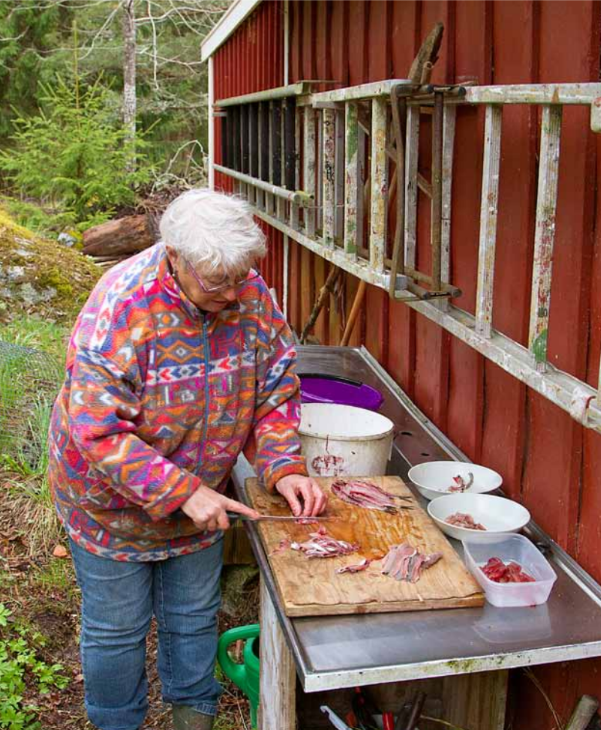
Astrid Gustafsson
Photo: Bo Nettelbladt
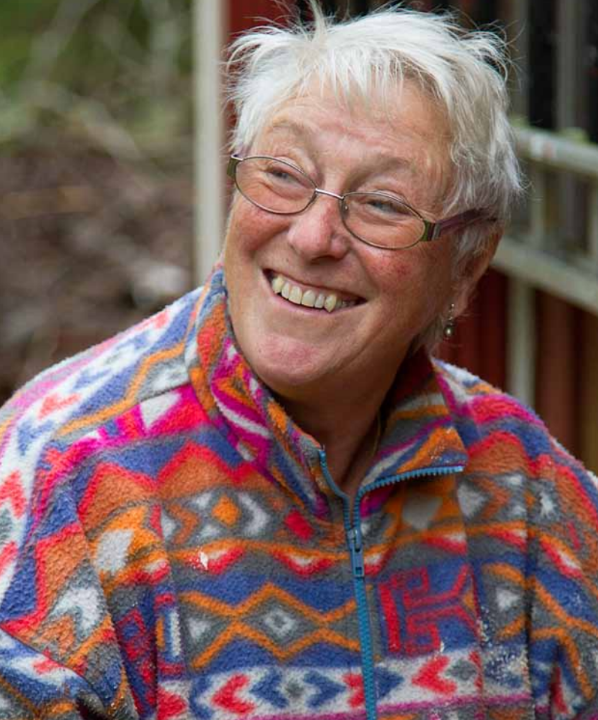
Astrid Gustafsson
Photo: Bo Nettelbladt
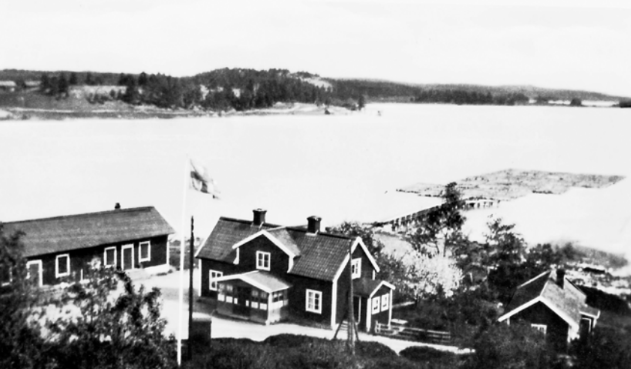
Hållsviken's dock
Historical aerial photo of Hållsviken's dock
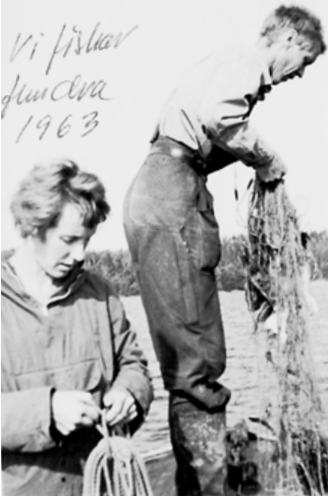
Astrid fishing for flounder
Archive photo